

The same notes, different order
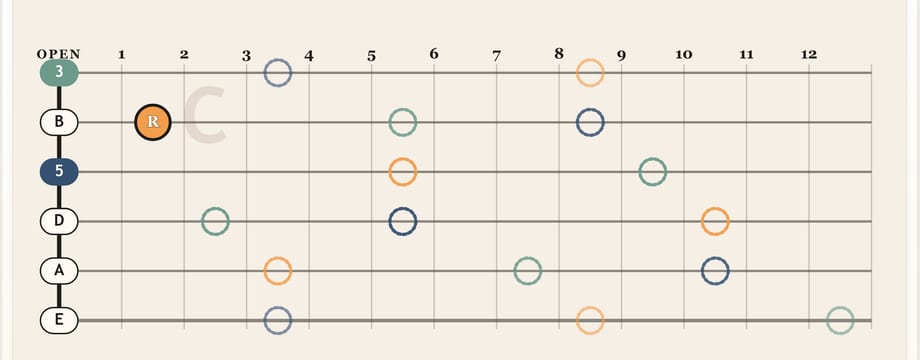
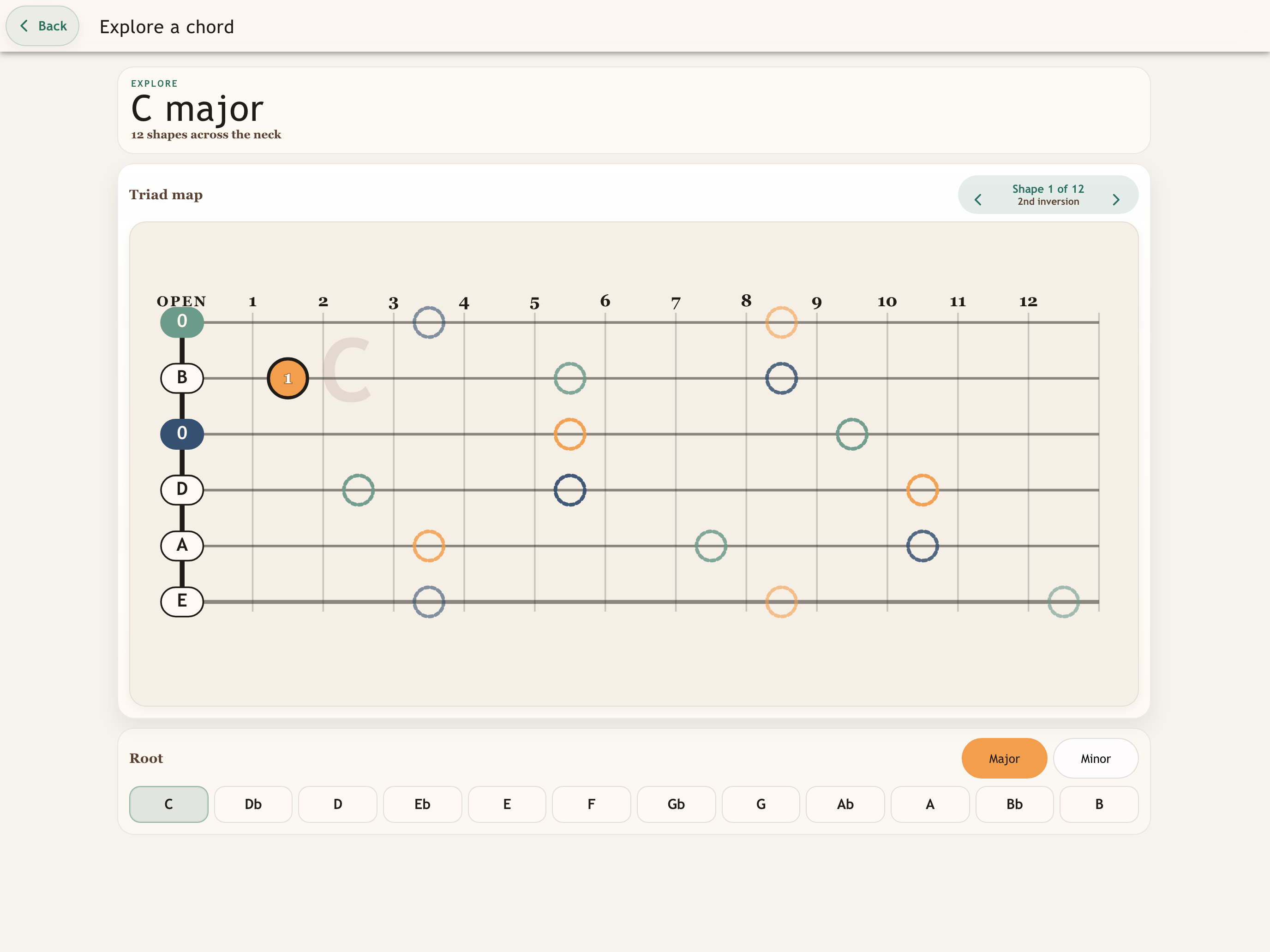
A C major triad has C, E, and G. Root position puts C on the bottom. First inversion puts E on the bottom. Second inversion puts G on the bottom. The chord name stays C, but the shape and sound change.
On guitar, this matters because the closest C major triad might not be the root position shape. If your hand is already near an E or G based shape, that inversion may be the musical move.
How CAGED helps
CAGED gives you familiar chord-form neighborhoods. Instead of learning random grips, you can see a small triad as part of a larger C, A, G, E, or D form. That makes the neck easier to organize.
Practice order
- Choose one chord, like C major.
- Find root position, first inversion, and second inversion in one fret window.
- Move to the next nearby CAGED area.
- Use the same three inversion names there.
Do not stop at naming shapes
The inversion names are useful, but they are not the finish line. Once you can find them for one chord, put them into a progression. That is where you learn which inversion feels natural after the previous chord.
Map the inversions, then move.
Use Chord Explorer for one chord, then jump back into a progression drill.