
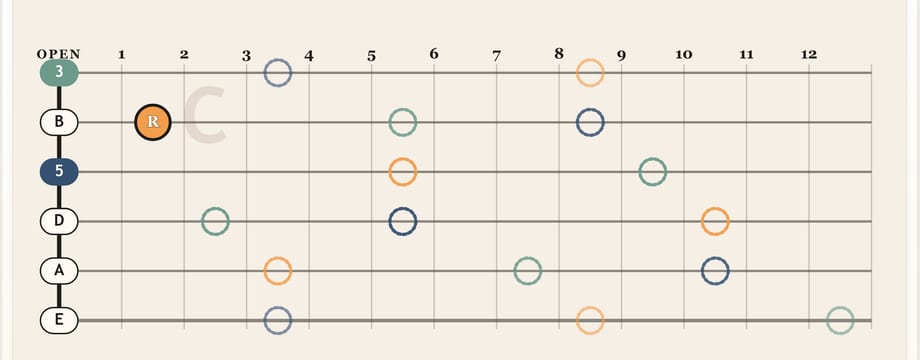
The formula
A major triad is root, major third, and perfect fifth. A minor triad is root, minor third, and perfect fifth. In plain guitar terms, the fifth stays the same and the third drops by one fret.
For C major, the notes are C, E, and G. For C minor, the notes are C, Eb, and G. One note changes, but the whole emotional color changes with it.

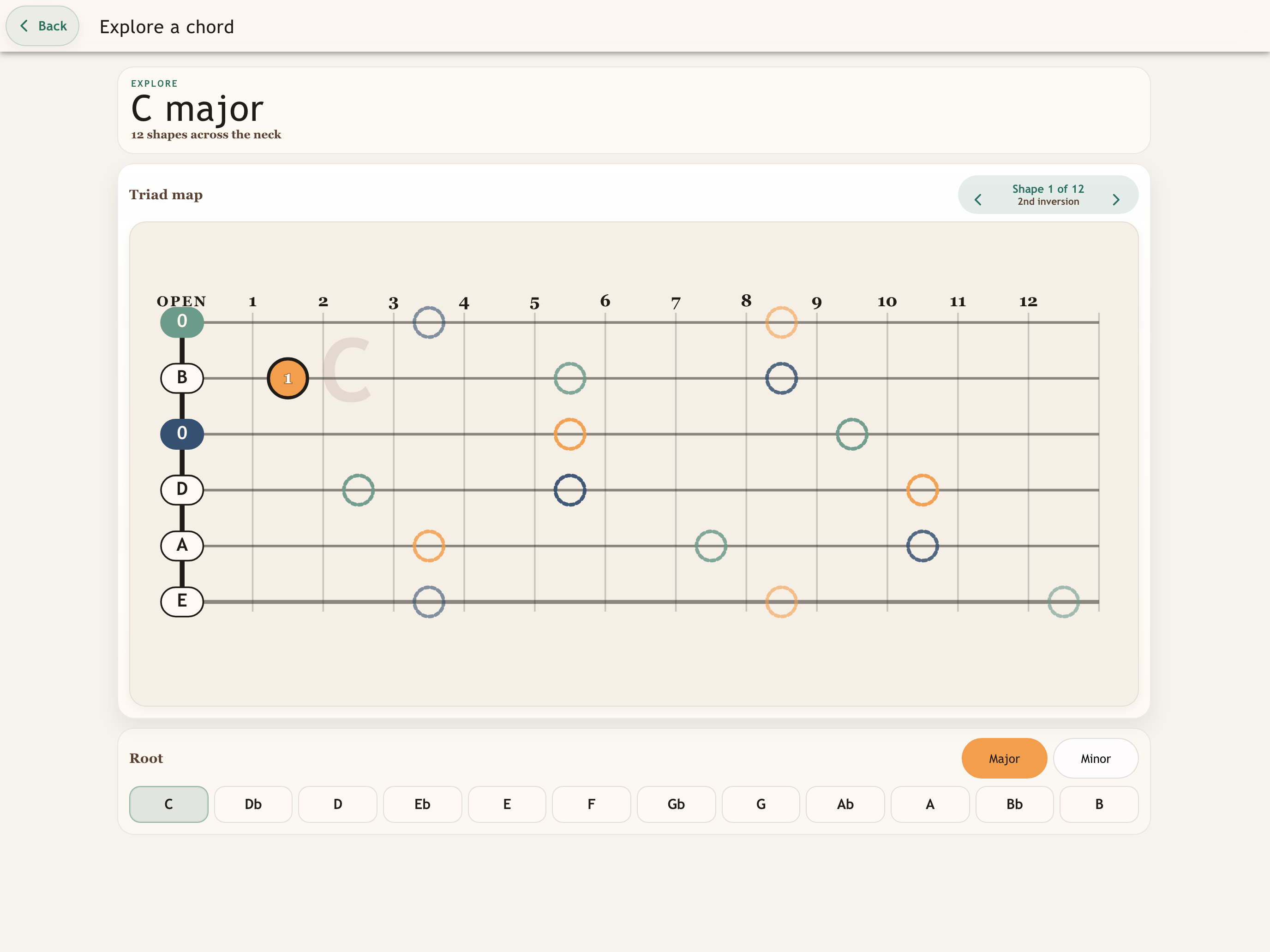
Practice the sound, not just the shape
It is tempting to memorize one major grip and one minor grip. That helps at first, but the better practice is to see which note is the third, then deliberately lower or raise it while keeping the root and fifth clear.
Major to minor drill
- Choose one CAGED triad shape.
- Play the major version and name the root, third, and fifth.
- Lower the third by one fret to make it minor.
- Move the idea to another inversion.
Put both qualities into progressions
Real progressions mix major and minor chords all the time. A loop like C, Am, F, G asks you to move between both qualities while staying in the same key center. That is where the formula becomes music.
Switch between major and minor maps.
Use Chord Explorer to see one chord quality clearly, then practice it inside a loop.